Return to the Scene… What Has Changed in ISIS’s Equation in Syria?
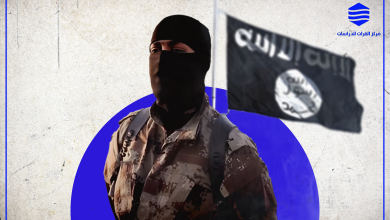
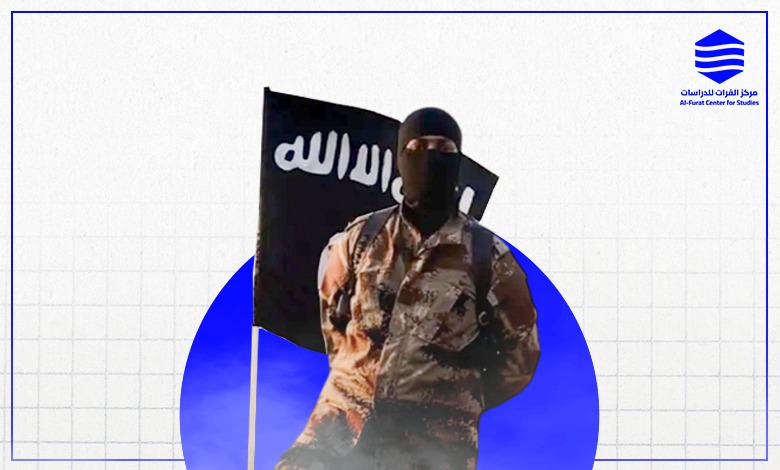
Recent developments in Syria, particularly the shifts in territorial control between the Syrian Democratic Forces (SDF) and the new Syrian government, have led to the withdrawal of the SDF from vast areas that once constituted forward lines of defense against ISIS sleeper cells. This has resulted in the gradual dismantling of a security architecture built over years of war against the Islamic State. Security gaps have emerged in areas long considered vulnerable to infiltration, especially in Raqqa and Deir ez-Zor, where fragile social and economic structures continue to provide fertile ground for the reactivation of the group’s clandestine networks. Indicators suggest that ISIS is resurging in Syria, as reflected in the numerous attacks it has recently claimed across different parts of the country.
However, the key question is not merely whether attacks have resumed, but rather the nature of this resurgence. In recent years, ISIS relied primarily on attritional operations through sleeper cells and hit-and-run tactics. Today, it appears to be seeking a more visible territorial presence in areas it previously lost militarily to the SDF and the International Coalition, particularly following its latest statement, whose sharp tone signals the contours of a new operational phase in the region.
What, then, has changed in the counterterrorism landscape to prompt the organization to shift from limited clandestine activity toward attempts at overt repositioning? What factors are enabling this transition?
The “War on ISIS” After the Fall of Assad
The fall of Bashar al-Assad’s regime in late 2024 marked a pivotal turning point. Since 8 December 2024, Syria has faced a broad political and security vacuum. This vacuum has been accompanied by widespread weapons proliferation, the multiplicity of armed factions with divergent ideological references, and the rise of mobilizing rhetoric of a sectarian and extremist religious character, conditions reminiscent of those that facilitated ISIS’s initial ascent. Amid this landscape, the organization managed to regroup and expand recruitment networks, particularly in the Syrian desert and rural Deir ez-Zor.
With power transferred to a new government in Damascus, the counterterrorism file initially saw no significant change, as the existing partnership between the SDF and the International Coalition continued on the ground. However, the March 10 agreement between the SDF and the Syrian government introduced a new equation. The agreement included provisions regarding the integration of the SDF into the newly formed Syrian army and implicitly linked military restructuring to the future of counterterrorism efforts. This coincided with clear U.S. insistence on resolving the integration question as a prerequisite for lifting sanctions on Syria or formally admitting it into the International Coalition against ISIS.
Yet the agreement was never implemented in practice. Military confrontations resumed, redrawing lines of control. The SDF withdrew from Arab-majority areas and redeployed in Kurdish regions in northeastern Syria. This shift was not merely a change in military geography but amounted to the gradual dismantling of the security framework that had served as the primary line of defense against ISIS’s return.
This transition had serious repercussions for prisons, camps, and detention centers housing thousands of ISIS fighters and their families. Widespread escapes occurred, including high-risk detainees, as seen in al-Shaddadi prison and al-Hol camp in Hasakah. Facilities previously administered by the SDF with direct Coalition support, key in preventing the reconstitution of the group’s human infrastructure, lost much of their effectiveness following military redeployments and Damascus’s adoption of a “military-first” approach, leading to security breaches and widespread disorder.
ISIS’s Resurgence and Regional Rearrangements
The situation grows more complex with the transfer of several ISIS leaders to Iraq, despite Damascus’s formal accession to the International Coalition. This move raises questions about its motives and timing. Historically, prisons have been a strategic priority for ISIS, which has repeatedly sought to launch major operations to free its leaders. Concentrating these figures in Iraqi prisons could therefore present a primary target for future operations. The transfer may also reflect international, particularly American, distrust in the Syrian government’s capacity to manage detention facilities, especially those holding senior ISIS figures, prompting swift action to avoid a repeat of the al-Shaddadi scenario.
Developments concerning ISIS cannot be separated from the broader regional context and U.S. Middle East strategy, particularly regarding countering Iran and its proxies. The international consensus that accompanied the rise of Syria’s new leadership and the political support it received reflect a desire to reshape the Syrian landscape in line with Washington’s priorities. President Donald Trump’s statement that he played a role in appointing Ahmad al-Sharaa as Syria’s president underscores the nature of the political sponsorship extended to the new authority.
Within this framework, a government led by figures emerging from Hay’at Tahrir al-Sham appears part of broader regional arrangements intersecting with Israeli interests and efforts to curtail Iranian influence in Lebanon and Iraq. Trump’s “America First” doctrine aligns with a transactional logic: support in exchange for strategic repositioning serving American and Israeli interests.
The historical relationship between ISIS and Hay’at Tahrir al-Sham further complicates the picture. HTS previously pledged allegiance to the Islamic State before breaking away due to disagreements over strategy, geographic scope, and the timing of declaring the “caliphate,” rather than over ideological foundations. This legacy raises questions about the ideological composition of the new Syrian army, particularly as former ISIS members and militants from other hardline factions such as Hurras al-Din have joined formations affiliated with the new authority following the dissolution of their groups. The result is a formally recognized army enjoying international backing but potentially ideologically penetrated by ISIS sympathizers.
On the ground, ISIS movements have intensified, especially along the Syrian-Iraqi border, seeking to expand its operational space by capitalizing on several factors:
- The SDF’s withdrawal from socially, politically, and security-fragile areas with potential local receptivity, such as Raqqa and Deir ez-Zor.
- The withdrawal of U.S. forces from bases in Syria, notably al-Tanf and al-Shaddadi.
- Leniency or inadequate control by Syrian government forces, evidenced by mass prison escapes and the release of numerous detainees, including those held in al-Aqtan prison.
- A general amnesty issued by interim President Ahmad al-Sharaa covering individuals accused or convicted of criminal and terrorism-related offenses, controversial given that the interim constitutional declaration grants the president only limited pardon powers.
- Increased recruitment following the organization’s recent statement announcing a new operational phase.
- Exploitation of deteriorating economic conditions in areas now under government control.
- Leveraging perceptions of marginalization among Arab communities dissatisfied with joint SDF-government security arrangements.
Attempts by ISIS to move toward Iraq evoke memories of Mosul’s fall in 2014, albeit under different circumstances. Any replication of that scenario would require first consolidating a strong foothold inside Syria, particularly along the eastern Deir ez-Zor border strip, where activity has intensified around al-Mayadin and al-Bukamal.
Iraq, for its part, has mobilized forces along the Syrian border. Kurdish Peshmerga forces have entered a new phase of reform and restructuring, including unified operations rooms and enhanced coordination with federal forces, aiming to close security gaps. Should ISIS escalate in Iraq, it would confront the Popular Mobilization Forces (PMF), one of Iran’s principal regional proxies. Weakening the PMF would align with broader efforts to curb Iranian influence, intersecting with U.S. and Israeli strategic priorities. In this sense, ISIS movements may become entangled in complex regional power balances, whether directly instrumentalized or indirectly benefiting from systemic fragilities.
What About the SDF?
The Syrian Democratic Forces, whose backbone consists of the Kurdish People’s Protection Units (YPG) and Women’s Protection Units (YPJ), have been the only local force to receive direct U.S. backing and the most reliable partner of the International Coalition against ISIS.
Despite statements by U.S. envoy Tom Barrack suggesting that the SDF’s counterterrorism role has concluded, no official declaration from either the SDF or the U.S.-led Coalition has formally ended the partnership. Nevertheless, recent developments indicate a practical redefinition of that role. Integrating SDF units into the new Syrian army while keeping them stationed within their traditional areas of deployment appears designed to preserve organizational specificity while limiting their operational scope. In practice, this confines their mission to protecting Kurdish-majority regions rather than engaging in broader counter-ISIS operations beyond their geographic remit. The shift, therefore, is not the termination of partnership but the reconfiguration of its operational parameters.
Conclusion
ISIS’s resurgence may not simply be a byproduct of post-regime chaos, but rather the outcome of intertwined domestic, regional, and international dynamics that have recreated a permissive environment for its expansion. Amid security fragility, ideological ambiguities within the new military structure, the erosion of prison management systems, and shifting U.S. strategy toward Iran, the ISIS file stands at a critical juncture. The question is no longer whether the group will attempt to expand, but to what extent current arrangements and transformations will allow it to translate those attempts into a renewed project of proclaiming a “caliphate.”